Fisher Jones Family Dentistry

Your child’s first dental visit

Dr. Garrett checking in!  We are asked very often by new parents about the appropriate time to bring in their children for their first dental visit.  According to the American Association for Pediatric Dentistry, the correct time is when their very first tooth shows through!  That seems extremely early to most, as that sometimes means under 6 months old.  I love this rule of thumb though because it makes the decision very simple.  In addition, it allows us to build a very firm early foundation for lifelong oral health.

We like to call this first visit a “fun visit.”  The main goal is proper parent education.  We run through all the important information that the parents will need to keep their child on track for a cavity-free life.  We also like to take a quick peek inside the child’s mouth, which requires quick reflexes in order to not get chomped!  Not only does this allow us to check for any obvious abnormalities, but it also introduces your child to the concept of having a dentist check their teeth.  We are all aware that a visit to the dentist can be a frightening proposition for some children (and even some adults!), so it is ideal that we start with a positive experience.  The hope is that for the rest of their lives, they will view a visit to the dentist as a fun and routine part of their lives.

So…as soon as that first little tooth pops through their gums, get your little guy or gal into the office for a visit.  Let’s work together to build a solid foundation of oral health for our youth.

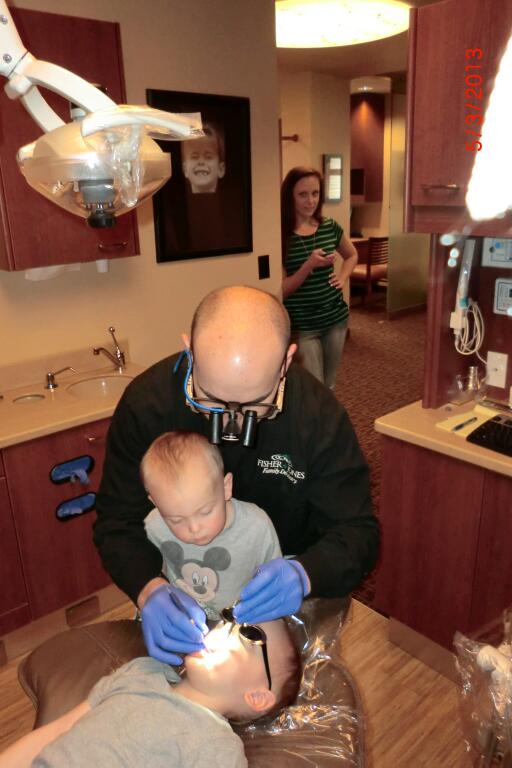
Dr. Garrett and his sons (with mom looking on)


Local News

Dr. Matt here.  Doc’ do I need a shot?  Yes, you will need some local anesthetic to be comfortable during the planned procedure. These words bring people a lot of anxiety.  It may be a specific fear or a generalized thing. Either way it can be a treatment hurdle for some people. Some patients develop coping mechanisms to distract themselves during the numbing process while others in addition use medications to alter their current consciousness (Intravenous sedation, oral sedation, and nitrous oxide).

Anesthetics are similar to the drug Cocaine, discovered in 1860.  The early locals of the 1900’s were “Novocaine” like and after 1950 “Lidocaine” like.  There are other additives that increase or decrease the depth, speed, and time of the desired effect.  One such additive is Epinephrine.  Your body knows it as adrenaline.  It speeds up your heart and may give you a racy feeling when injected.  There are dozens of “caines” to choose from and a lot of thought goes into the selection by the Doctor.

Personally, I am very thankful that we have so many great local anesthetics to choose from.  Most of the time patients get through the numbing process and get their work done without having any complications.  I cannot imagine what Dental treatment was like prior to the discovery of locals.  So, when you say, “Doc’, do I need a shot?” be comforted to know that you can do it and all is good.


Managing your medications safely

Dr. Garrett here!  If you have ever been prescribed, or are going to receive in the future, an opioid pain killer (or narcotic), there are some important things to consider.  While these medications can be very effective in treating your pain, they also pose a risk to you, your loved ones, and others if not properly attended to.  Poisoning deaths from opioid medications increased dramatically from 1999 to 2006.  Also, you you may be unaware of the prevalence of prescription opioid abuse in high school students.  6% of 12th graders have used prescription pain killers for recreation within the last 30 days.  Often these are medications found unsecured in their family medicine cabinet.

So what can you do?

1. Take all medications as they are prescribed.  If you feel the need for more than you have been prescribed, please speak with your doctor.

2. Secure all medications so that no one has access to them but you.  They can be locked in a medicine lock box or a locked cabinet.

3. If you have medications left over, please dispose of them safely.  This can prevent them from being used by anyone other than you.  The follwing are drop off locations available to you in Thurston County:

-Lacey PD 

-Thurston County Sheriff’s

-Rainier City Hall

-City of Tenino

-Tumwater PD

-Yelm PD


In-Office Teeth Whitening: just in time for summer!

Dr. Jim here-

Fisher Jones is please to announce that we have incorporated a new in-office teeth whitening system:  PolaDay

For some time now, we have been looking for an in- office whitening system that is more time sensitive and doesn’t require the high intensity blue light than we currently use with our whitening product ZOOM! This new product is called PolaDay and it has two major advantages over other products;  it is a product that requires less time, and activates with out the need for a blue light.   In fact, our clinical trials indicate we can achieve excellent whitening results in one hour compared to the 3+ hours with ZOOM!

I tried this product last week and found my teeth whitened 5 shades in one hour! I hadn’t done any in- office whitening since I was a test subject in our office for ZOOM! when we first introduced it many years ago.  The one hour chair time in the Fisher Jones offices was, as always, very enjoyable and very comfortable. I did experience some post procedure “zings” on my teeth, similar to those sometimes experienced with the ZOOM! product, but they subsided overnight and I felt completely comfortable the next morning. This sensitivity indicates that some of the bleaching molecules  migrate towards the nerves of the teeth. However, the sensitivity was only present  in the lower front teeth.  These are  the smallest teeth in the mouth which tend to have dental nerves closer to the surface of the teeth. It is a sensation that is temporary and does not harm your teeth.

So if you have been hesitant to make an appointment for in- office teeth whitening because of the time in the chair and/or the blue light used for activation of the bleaching product, we have the answer for you!  One hour and you will have a whiter smile just in time for summer! Call us today to set up a consultation appointment to discuss PolaDay in- office whitening.

Tags: , , , ,

Saliva is a beautiful thing.

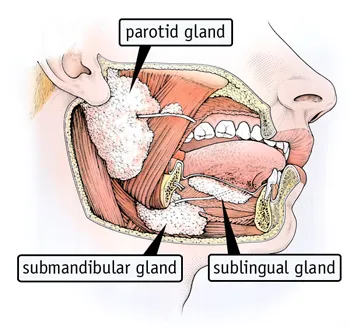
Dr. Matt here. Saliva is the watery secretion in our mouths that comes from the glands. The primary glands are located under the tongue (submandibular) and in the cheeks (parotid). There are also many minor secretory glands.

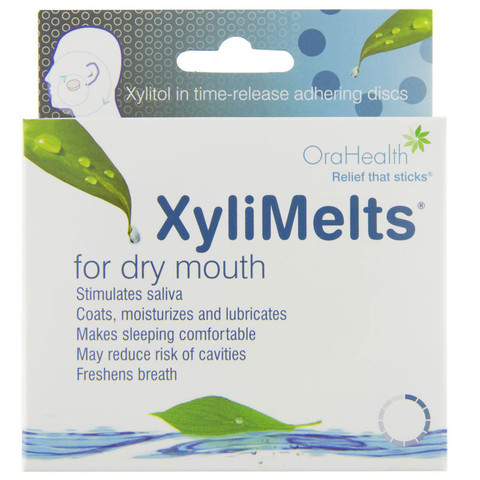
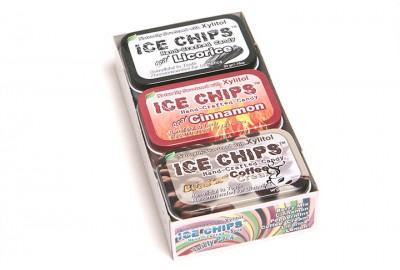
Saliva’s functions are tasting, chewing and swallowing of foods, moistens the mouth and starts the digestion of starches (carbohydrates). Saliva is made of mucus, the enzyme amylase (digestive enzyme for starches), many proteins and mineral salts. Normal flow rates for saliva is 1-1-5 liters per day. A stimulated flow rate of 1milliliter per minute or greater (more than a teaspoon). If you were to chew paraffin wax a to test your rate you should be able to spit out 5 milliliters in 5 minutes. Too often people do not have enough saliva. Saliva has a reparative process for the teeth and gums. Teeth are always changing. They are dynamic; minerals going out and minerals going back into the protective enamel surface. Every time we eat or drink changes are occurring. So if you do not have enough good saliva flow you can reach a point where the teeth are short of minerals. If the shortage continues eventually demineralization becomes a hole called a cavity. Many people report dry mouths (xerostomia). Dry mouth can be caused by many things. Necessary medications are the number one reason for dry mouth. Dehydration, Disease and infection,Smoking and Chewing tobacco, Surgical removal of salivary glands, Nerve damage, Side of effect of cancer treatment with head and neck radiation and or chemotherapy. There are many helpful ideas for dry mouth. The most important help idea is to drink a lot of water. Sugarfree chewing gum, candies (Ice Chips), lozenges all preferably with Xylitol ( a naturally occurring alcohol sugar that prevents cavities) can stimulate saliva production depending on your situation. Saliva substitutes can also be helpful, Biotene is a popular brand.

Use a fluoride toothpaste, and fluoride mouth rinse. In addition trays can be made that are similar to whitening trays to apply calcium paste to the teeth at nighttime or simply apply it with your finger like a night cream for your teeth. If you think that your mouth is dry get checked by your Dentist.

Picking the right toothpaste

Dr. Garrett here! I want to take a quick minute or two to talk about how to pick the right toothpaste for your teeth. Going to the grocery store to pick out a toothpaste can be an overwhelming endeavor. There seems to be more toothpaste than you can imagine! So how in the world are we supposed to know which to pick? It is important to look for several things when deciding on the correct toothpaste for your own teeth, but first we need to talk about these teeth. Are your teeth sensitive? Do you have active cavities? Do you have periodontal disease and/or gingivitis? How old are you? These are all questions whose answers can have an impact on which toothpaste is the correct one for your specific teeth. So let’s dive into this!

-ALL toothpaste you consider should have fluoride in it. No fluoride, no go! Fluoride is a molecule that helps prevent decay and even aids in the re-mineralization of enamel. The only exception is for infants and children who are unable to rinse and spit following brushing. They should use a toothpaste with xylitol in it. Xylitol is a natural sweetener shown to reduce tooth decay. Spry is a great example of such a product.

-ALL toothpaste should have the ADA seal on the box/tube. This ensures it has passed the rigorous testing process instituted by the American Dental Association in order to obtain the ADA’s stamp of approval.

-If you have active decay in your mouth, as diagnosed by your dentist, you need something with extra fluoride in it to help control and eliminate the decay process in your mouth. ClinPro 5000 is an example of such a toothpaste. It can only be sold through a dental practitioner. Once you have been free of cavities for a whole year, you can return to over-the-counter toothpastes (your dentist should make this decision for you).

-If you have gum disease, a toothpaste that includes an anti-microbial has shown some benefit for controlling that disease. Triclosan is an anti-microbial included in some toothpastes that has this benefit. Colgate Total is an example of such a toothpaste with this ingredient. (There are many others out there).

-If you have sensitive teeth look for a toothpaste that includes desensitizing ingredients in their formula. Stannous fluoride is the main one to look for. Sensodyne is my personal favorite and one that my patients seem to have the best results with.

-We recommend staying away from whitening toothpastes, especially if you have any enamel wear (which most of us do).  The abrasives in whitening toothpastes can be too harsh on our enamel and cause eventual erosion.  This can lead to you having sensitive teeth.  We have much more effective, and much safer ways to whiten your teeth if that’s what you desire.

Those are the basics for picking out your toothpaste. It is really quite simple. Does it have fluoride? Does it have enough fluoride for your mouth? Is it approved by the ADA? Does it have any additional a ingredients to help with any extra conditions you may have? That’s basically it! So don’t feel overwhelmed by the large variety you see at the store. Narrow down your specific needs and go from there.

If you are ever unsure or have a questions about what toothpaste is right for you, please do not hesitate to ask one of us doctors! We are always here to help and love talking about your teeth!!

Tags: , , , , , , , ,

Two Doctors One Problem

Dr. Matt here.

Two Doctors for One Problem:

Dentists can’t diagnose sleep apnea and Physicians can’t make oral appliances.

Working together Fisher Jones Family Dentistry and Sleep center Physicians we can help you get well and cope with your condition.  Typically through a conversation we suspect Sleep Apnea and advise that you get a sleep clinic consultation and/or sleep study.  It can involve your primary care physician or we can refer you directly.  Daily I have people tell me about snoring, tiredness during the day, spouse observed stop breathing episodes and high blood pressure. Take this simple test.  Each question is answered on 0-3 scale.  If your score is 11 or greater you are at high risk, 10 or below is considered normal. Do you fall asleep when?

  1. Sitting and reading
  2. Watching TV
  3. Sitting inactive in a public place
  4. As a passenger in a car for an hour without a break
  5. Lying down to rest in the afternoon when circumstances permit
  6. Sitting and talking to someone
  7. Sitting quietly after a lunch without alcohol
  8. In a car, while stopped for a few minutes in traffic

This is just one example and a starting point.  In addition BMI (body mass index) greater than 35, age greater than 50, neck circumference greater than 40 cm, and male gender are other important information points.

20% of adults have Obstructive Sleep Apnea (OSA)

OSA is a sleep breathing disorder that involves repeated episodes of hypopnea (>50% reduction in airflow) and apnea (10 seconds no airflow) despite an effort to breathe.  We relax during our sleep, causing soft tissue in the back of the throat to collapse and block the airway.

The gold standard for treating OSA is a CPAP (Continuous Positive Airway Pressure).  Basically you wear a mask to bed that delivers you oxygen.

Some of us can wear a CPAP with great success and some of us cannot.  If you cannot then maybe Oral Appliance Therapy (OAT) may work for you.  Your sleep Physician needs to help you with your decision.  I can make an appliance that brings your lower jaw forward and opens up the back of your throat while you sleep.  We use two brands the TAP 3 and Somnomed.

So in summary, get checked and get treated.  Sleep is so important for body and mind restoration, active immune function, dependable memory and safe emotional discharges.  That person in your life that seems unreasonable may just be sleep deprived. Sleep is a natural state, where we have reduced or absent consciousness, reduced sensory activity, and reduced voluntary muscle activity.  Normal sleep for an average human is 7-8 hours per night.  I hope that this information did not put you to sleep.  Lol


Tissue Grafting

Dr. Garrett here!  Many of us have what is called “gum recession.”  This is when the gum tissue covering the roots of our teeth begins to migrate down the surface of the root.  Recession can be caused by many things, but the main causes are: clenching and/or grinding your teeth, brushing too hard, and periodontal disease.  When we clench and grind our teeth together, there is micro-movement of the tooth.  This causes pressure and inflammation in the bone holding our teeth in place.  As a result, the bone resorbs down the root surface.  Tissue follows bone, and thus you get a recession defect.  Brushing our teeth too hard physically wears away the gum tissue around our teeth, and also causes inflammation of the supporting bone.  Lastly, periodontal disease is a bacterial process where the inflammation caused by the presence of pathogens in and around our gums causes the supporting bone to essentially dissolve away.  As said before, the gum tissue follows where the bone is going and recession results.  We typically do not see the actual recession in patients with active periodontal disease because their gums are inflamed and puffy.  When the disease is removed however, the now healthy gum tissue recedes to where the bone is.

Treating these various sources of recession is the most important aspect of resolving receding gums.  This may include wearing a night guard when sleeping to prevent grinding and clenching.  It may also include changing our brushing habits and/or using a softer toothbrush.  A Sonicare toothbrush is my favorite solution for those “aggressive brushers.”  For patients with periodontal disease, a deep cleaning to remove the inflamed tissue and bacteria is essential.  Followed by quarterly visits until healthy tissue is re-established.  The addition of antimicrobials and antibiotics may even be necessary.

Once the source of the recession is treated, it is time to consider covering these exposed root surfaces.  Why cover them?  Well, exposed roots can cause severe sensitivity to cold food and air.  Additionally, the thin tissue that remains around a tooth with recession is often thin and prone to further disease.  So how can we cover these roots?  The best method involves grafting new tissue to the exposed root surface.  This is done in two different ways.  The first has been around for a long time, and can work quite well.  It involves removing a slice of tissue from the roof a patient’s mouth, and then transplanting that tissue to the exposed root surface.  The advantage of this procedure is the graft rejection is rare due to the fact that we are reusing the patient’s own tissue.  There are two large disadvantages to this type of grafting, however.  First, the donor site on the roof of the mouth is extremely painful!  Many patients state that the pain in this area is worse than any mouth pain they have ever experienced. Second, the color and texture of the grafted tissue is much different than the normal tissue the covers the root surface.  We usually call these grafts “tire patches” due to their appearance (see below).  In many situations, this can be a cosmetic issue.

<– Tire Patch!!

The second method for covering exposed root surfaces is through the use of donor tissue.  This is called an allograft.  This is human tissue harvested from carefully selected human donors that has been thoroughly sterilized.  No person has ever been found to have transmitted a disease from one of these grafts!  The allograft is surgically placed over the exposed root surface in a similar manner as the first method.  The main difference being that no donor site surgery is performed, completely eliminating the pain and morbidity associated with this surgery.  The area where the tissue is grafted will have some slight soreness, but most patients report the discomfort to be quite minimal.  The tissue, when healed, is indistinguishable from the surrounding gum tissue.  Thus, it is an excellent procedure for areas where esthetics would be a concern.

I am pleased to say that I am now performing this procedure in the office and have been very excited with the results.  We have been able to eliminate cutting out tissue from the sensitive palate area of the mouth, thus making it a much more comfortable procedure.  In addition, by avoiding the referral to a specialist we are able to keep your costs down significantly.  If you have any questions or comments about this surgery, please do not hesitate to ask any of us!


Tags: , , ,

Biofilms and Your Mouth


Biofilms and Your Mouth

What are They?

Bio = living

Film = a sticky layer.

Biofilms are groups of bacteria that live in a moist environment. Biofilms can be helpful or harmful, depending on where they are found. They can be helpful on rocks in a stream because it can form the base of a food chain. A harmful example is when you get an antibiotic-resistant infection around a prosthetic hip joint.

In the mouth, biofilm is a fancy word for plaque. There are good bacteria in your mouth that help compete with fungus and bad bacteria. In a biofilm, bacteria are more protected from things like Listerine and antibiotics. We don’t want the bad bacteria to be protected, so we need to encourage good bacteria and properly disrupt biofilms (plaque).

How can it affect me?

Biofilms in your mouth (plaque) protect the more destructive forms of bacteria associated with gingivitis and periodontal disease. Left undisturbed, your plaque becomes more organized, sticky and harmful. Biofilms are harmful because they cause destruction of your gum tissue and bone surrounding your teeth, both directly and through the reaction caused in your immune system.

Many studies have shown the link between chronic inflammation in the mouth and its association with inflammation in other organ systems, such as in diabetes and heart disease.

How can I affect it?

One of the main goals with careful daily home care, ie, careful and thorough brushing and flossing, is for you to disrupt the growing bacteria so that it cannot get to this organized stage (biofilm) that leads to problems. Regular visits with your hygienist allow us to remove the hard tartar that is harboring these disease-causing biofilms.

New products on the market try to weaken the biofilm in different ways. There are now probiotic lozenges that use natural competition to crowd out the bad bacteria. GUM PerioShield is a mouth rinse that coats the teeth and tissues and targets the bacteria’s ability to secrete the sticky substance that helps form the biofilm. Waterpiks help remove biofilm in deep pockets, where they are most protected.

Smile With Confidence Once Again!

We provide exceptional dental care for the entire family in the Greater Olympia WA area.
Call us: 360-943-4644

Tags: , , , ,

High standards for patient safety

Dr. Garrett here!  The recent report of an oral surgeon in Oklahoma who had been practicing for decades using unsanitary equipment on his patients has brought to light many issues in how we as health care providers treat our patients.  More specifically, how we are able to maintain a safe environment for our patients.  One in which they can have confidence they are being treated in a sanitary way.   Washington state has set legal guidelines which all dental offices are required to follow (click here for specifics).  The main concern here is cross-contamination.  This refers to the passing of microorganisms, bacteria, or other harmful substances from one patient to another through unsterile or improper equipment, procedures, or products.   Not only does cross-contamination put our patients at risk, it can also potentially harm our employees.  There are many infectious diseases that can be passed via blood and/or saliva, thus the proper sterilization or disinfection of equipment used must be a priority.

Fortunately, there exists technology capable of killing even the most resilient bacterial spores.  The main machine relied upon to perform this is an autoclave. In a nutshell, an autoclave works by increasing the temperature in a sealed container that has had all the air removed.  This high pressure environment allows steam to be heated to temperatures above 120 degrees Celsius for a sustained time period.  This highly heated steam completely kills any pathogens exposed to it.  An autoclave must legally be tested every single week to ensure that it is operating effectively.  We ensure this by using spore strips.  These are paper strips impregnated with Bacillus bacteria, which are the most difficult bacteria to kill.  We place a strip in our autoclave every single week that we are open, and send the strip to a company to process it.  They send us back a report letting us know if we are killing all of the bacterial spores.  If the report comes back with evidence of spore activity still present, the autoclave must be fixed or replaced.

The autoclave is a great machine allowing us to completely sterilize most of the equipment used in our daily procedures.  There are other aspects of sanitation that are just as important to us.  This includes disposable plastic barriers on non-removable equipment.  Everything in each suite is wiped down thoroughly with a disinfectant wipe after every single patient, no matter what procedure was done in the room.   An ultrasonic cleaner is used on all small instruments to remove any organic matter prior to autoclave sterilization.  Gloves, hand-washing, eye protection, masks…the list goes on!!  We treat every patient before, during and after their appointment as though they have an infectious disease that could harm us or others.  This is not a negative thing!! This is to maintain our high standards that our patients and employees expect and deserve.

Please feel free to ask us for a tour of our state-of-the-art sterilization center.  We are always proud to show it off!!

Tags: , , , ,